
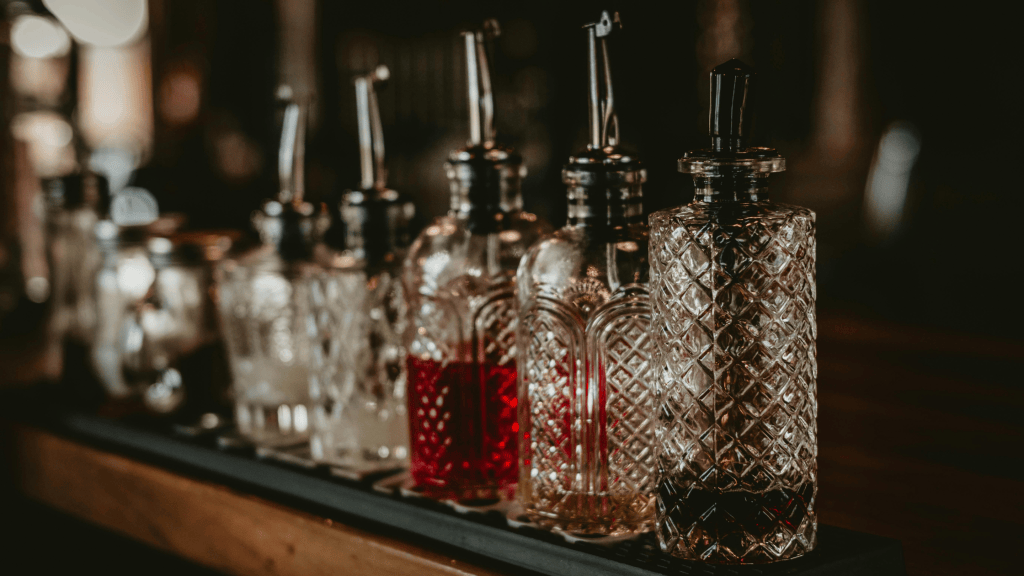
A dash or two is all it takes. Cocktail bitters are designed to be used sparingly, a few dashes at a time, to add depth and balance to a drink. Before these concentrated tonics ended up in cocktail recipes, they were used in medicine and sold by apothecaries. So how did these bitter tonics end up into our drinks?
What are cocktail bitters?
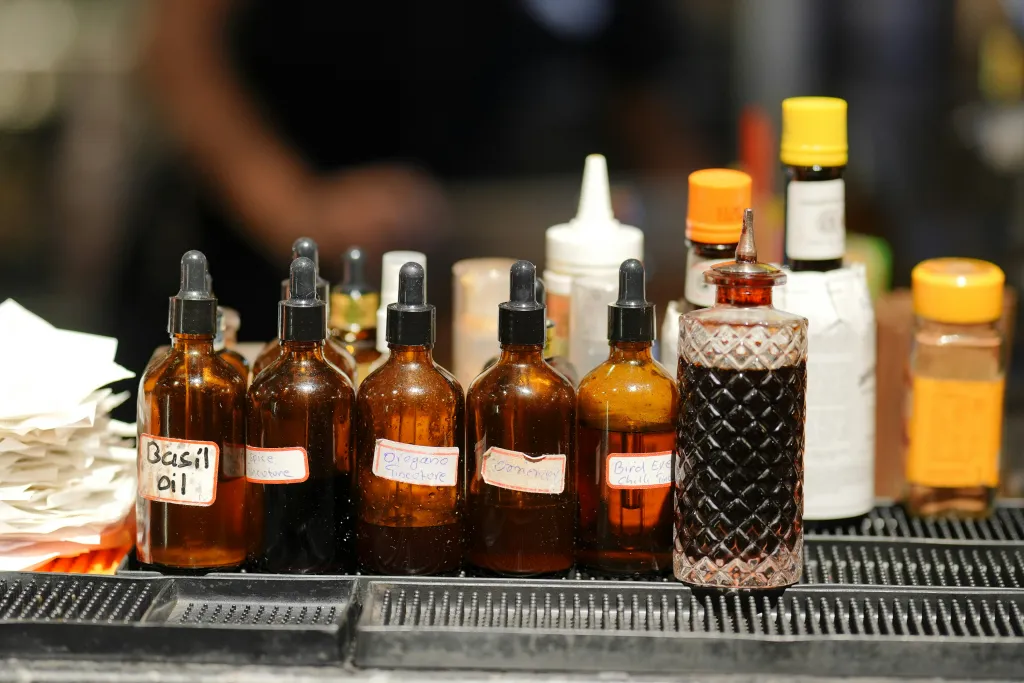
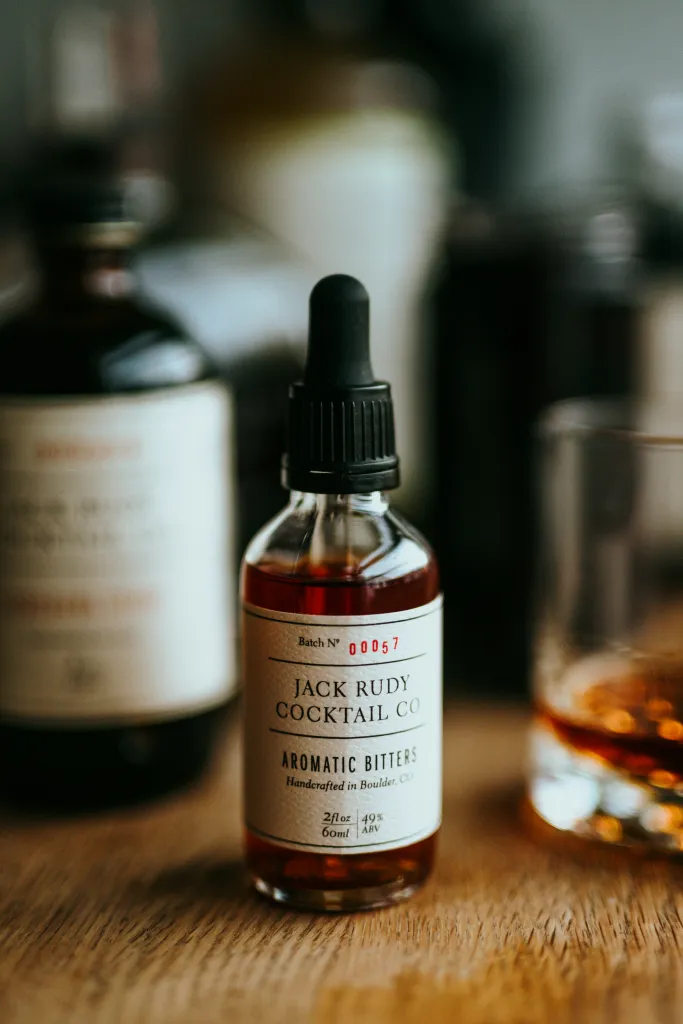
Cocktail bitters are concentrated infusions of botanicals, made using roots, barks, herbs, citrus, spices and other natural ingredients. These are steeped in a high-proof spirit base and used in small amounts to round out a drink’s flavour. Unlike amari or aperitivo bitters, which can be sipped on their own, cocktail bitters are a seasoning. A few drops do the work, much like salt in cooking, helping to bind the flavours together. Most bitters sit at around 35-45% ABV.
Today, bitters come in an array of flavour profiles. In fact, there is more choice than ever before. They can bring aromatic bitterness or chocolatey notes, coffee, winter spices, florals and more.
The early history of bitters
Back in the 18th century, there was less choice in flavour profiles as bitters were more potent and heavier on the bitter compounds due to being used for their health benefits rather than general consumption. Some common bittering agents included gentian root, cinchona bark (the source of quinine), wormwood (a key ingredient in absinthe), angelica root and even bitter orange peel. Obviously, these botanicals may still be used today, but other more palatable ingredients are also added to create a wider range of flavour profiles that are more suitable for mixing cocktails.
Medieval alchemists, ancient Egyptians, Greeks and Romans all created their own variations of bitter tinctures and concentrated tonics by blending botanicals with wine or spirit base. These were used for medicinal purposes, to ease pain, to help with bloating, to support better digestion, to relieve heartburn, to calm nausea or even to stimulate appetite.
See my previous blog post about Aqua Vitae – The Mother of All Spirits.
Bitterness reads to our brains as a possible toxin, which is exactly why we tend to avoid it. But that same bitter trigger prompts saliva and gastric juice production protecting the stomach lining, aiding vitamin absorption and helping break down food faster. It’s the same principle behind why digestifs are traditionally bitter.
Birth of Angostura Bitters
Angostura Bitters came about for much the same reason: Dr Johann Siegert, a German army doctor, developed the recipe to treat soldiers’ stomach ailments. Stationed in the town of Angostura (since renamed) in early 1800s Venezuela, he spent years testing different blends before landing on the formula he was after in1824. Initially he shared his tincture with patients, friends and family but over the following decades the bitters found their way to a wider market. By 1875 a few years after Siegert’s death his three sons had relocated production to Trinidad, where it remains today.
Bitters made their way to the US, UK and Europe largely through navy ships, where sailors would mix a dash into their gin rations. It even helped to create Pink Gin in England. It’s not a stretch to think that’s where cocktail culture first took shape.
From medicine to mixing
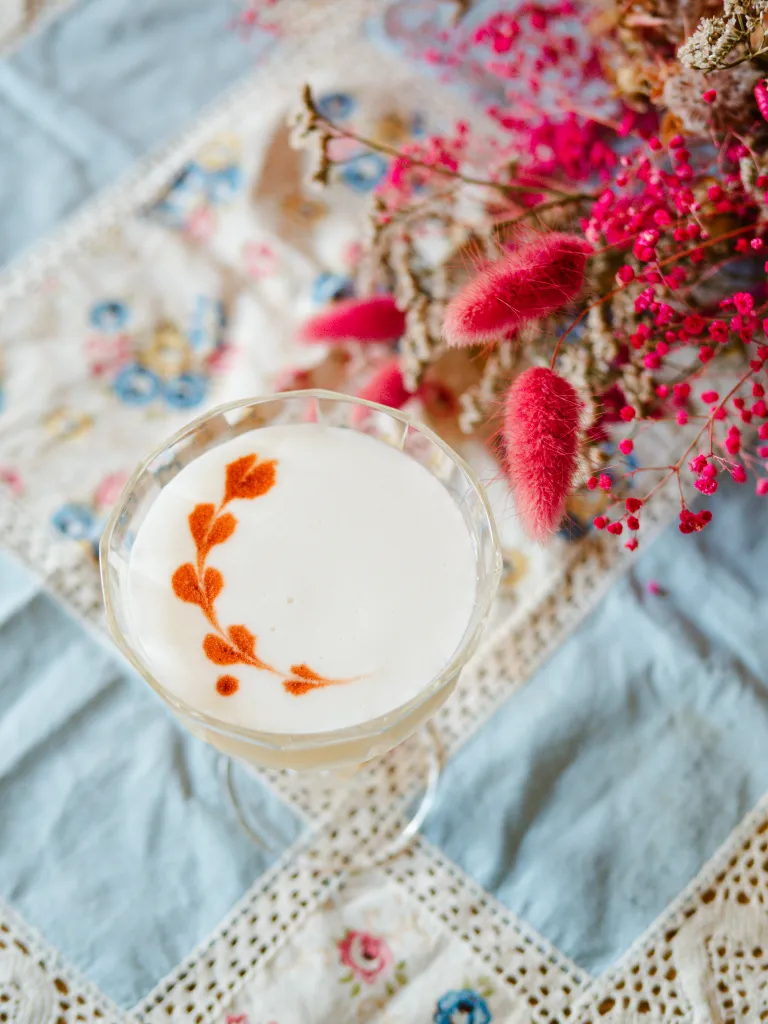
By 1804, someone in Virginia had written down a ‘Whiskey Cocktail’ recipe in their private notebook. It listed whiskey, bitters and sugar as the ingredients, which was virtually identical to what we’d now call an Old Fashioned. However, it wasn’t until 1806 that a newspaper, The Balance, and Columbian Repository, put a public definition into print, describing a cocktail as ‘a stimulating liquor, composed of spirits of any kind, sugar, water and bitters’ in response to a reader asking what the word meant.
By the early 1900s, bitters were behind every bar. Jerry Thomas, author of the first cocktail book, and Harry Craddock of The Savoy Cocktail Book both stocked dozens of bottles.
Thomas’s Bartenders Guide: How to Mix Drinks (1862) is full of bitters-based recipes. His Old Fashioned Holland Gin Cocktail: “Crush a small lump of sugar in a whiskey glass containing a little water, add a lump of ice, two dashes of Angostura bitters, a small piece of lemon peel, one jigger Holland gin. Mix with a small bar spoon. Serve.” The same book gives us the Japanese Cocktail made with brandy, orgeat syrup and Boker’s bitters, which is believed to be one of the few recipes Thomas invented himself.
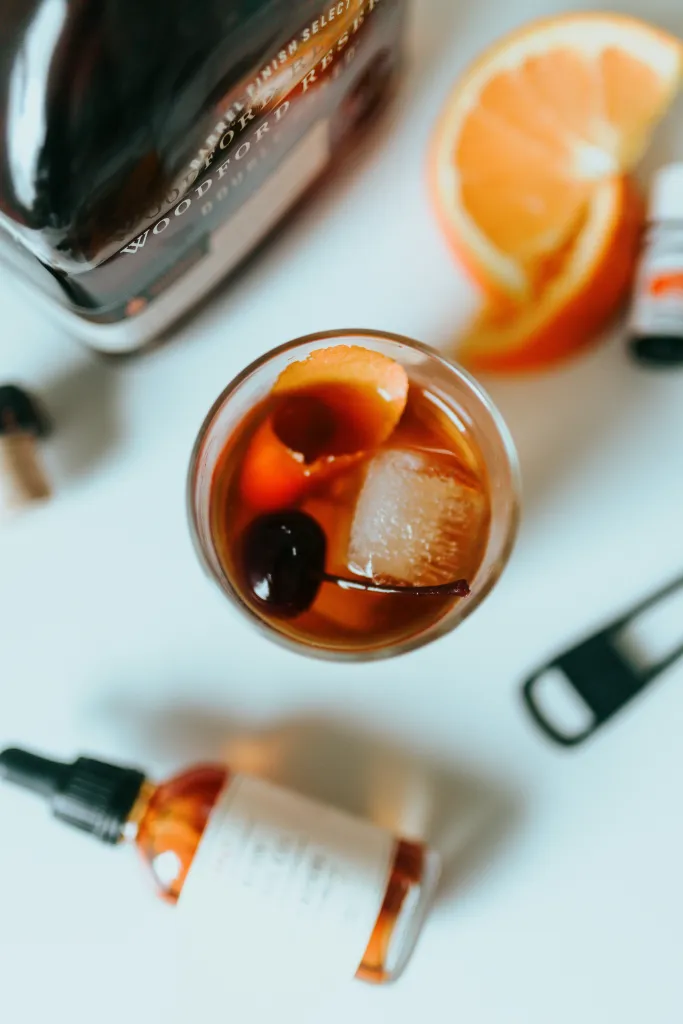
Check my previous blog post on how to make an Old Fashioned.
Around the same time, apothecary Antoine Peychaud was doing something similar in New Orleans. In 1838, he began serving his own bitters mixed with brandy at his Royal Street shop, creating the drink that would eventually become the Sazerac, which is still built on Peychaud’s Bitters today.
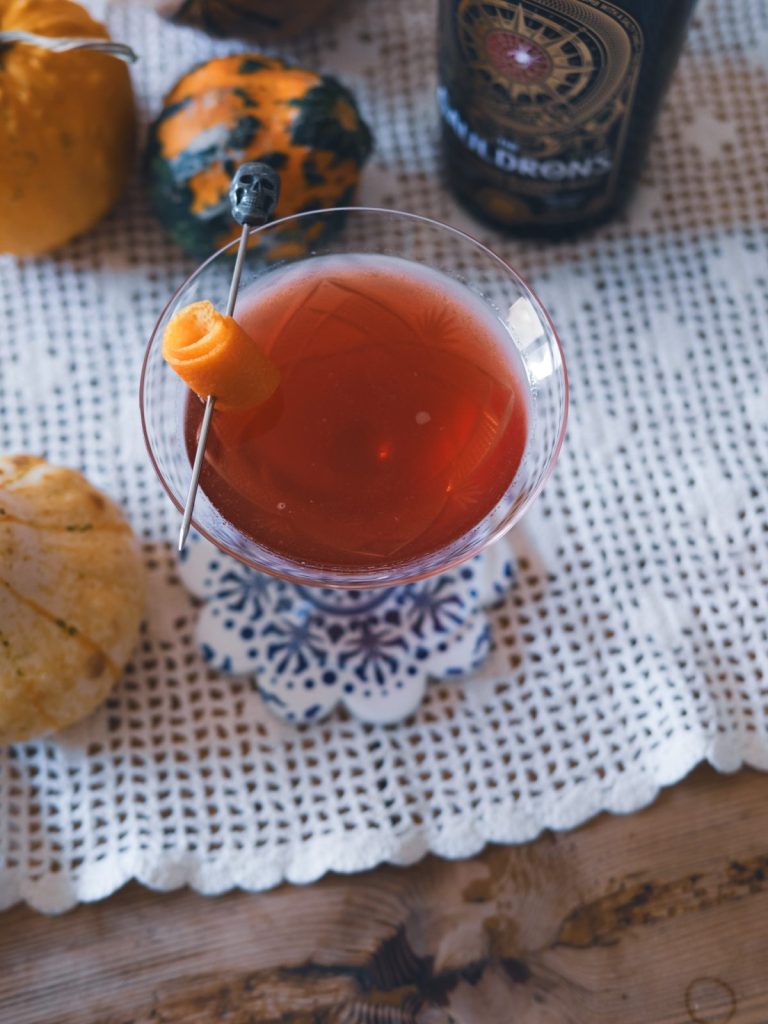
Then there’s the Manhattan. Believed to have been invented in the 1860s and often credited as the first “modern” cocktail thanks to its use of vermouth. Leave it out and you simply have an old-fashioned whisky cocktail. Today it’s made with whisky (usually rye), sweet vermouth and bitters, although several older recipes also called for a dash of gum syrup.
The decline and revival of cocktail bitters
Prohibition gave bitters an odd second life as bartenders used them to mask the taste of bootleg liquor, while teetotallers kept drinking them too, using their medicinal reputation as a loophole around the high ABV. Makes sense considering they were sold through apothecaries rather than bars.
Like most trends, bitters fell out of favour once Prohibition ended and it would take decades for cocktail culture to properly rediscover them. Today they’re firmly back, treated as the bar’s spice rack, a way to balance sweetness, add complexity and bring depth to a drink, as more bartenders lean into classic techniques and experiment with flavour. Who doesn’t love a classic recipe!?
Remarkably, only two 1800s bitters brands are still around: Angostura and Peychaud’s. Angostura alone holds an estimated 90% share of the cocktail bitters market and ships to more than 170 countries. Unlike Angostura, Peychaud’s never really left home. It stayed closely tied to New Orleans and the Sazerac specifically, rather than becoming a global bar staple. Of course, it is widely available today, but its popularity doesn’t match that of Angostura’s. There are new kids on the block too, but nothing can quite beat the king of bitters.
Do you use cocktail bitters at home? Do you have a favourite bitter brand?

Inka Larissa is an award-winning freelance spirits writer, content creator and Whisky Influencer of the Year 2026. Writing about whisky, cocktails and spirits since 2015, she explores the world of spirits from seed to glass. She is also co-host of the Whisky Sisters podcast.


