
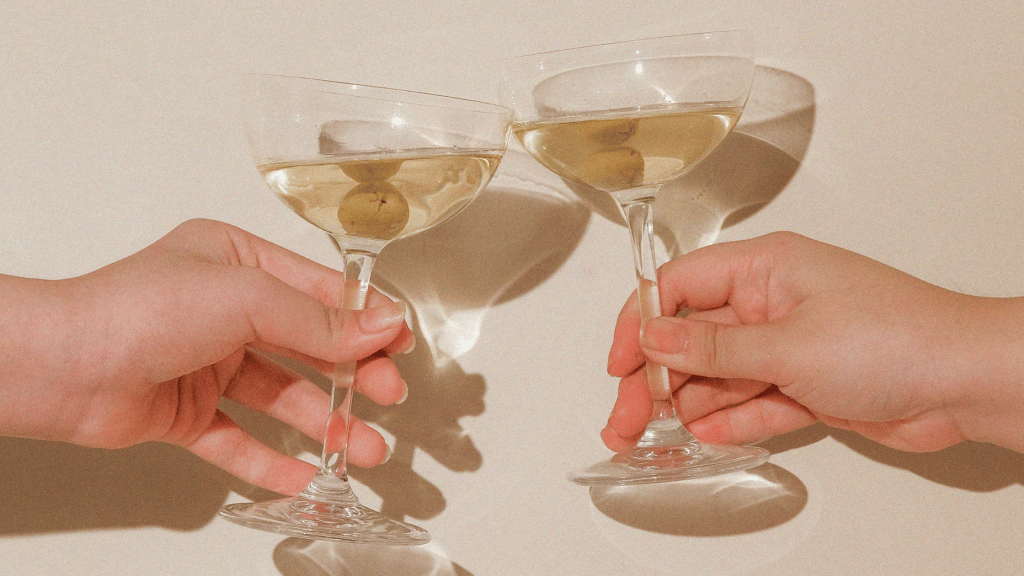
Italy isn’t the first country that comes to mind when vodka is mentioned. You don’t usually see Italians knocking back vodka shots at dinner, but there is more history here than you may think.
The story goes that in 1386 on their way to Lithuania, Genoese merchants made a pit stop in Moscow, carrying aqua vitae, a fiery distilled grape spirit, and gave a sample to Grand Prince Dmitry Donskoy. Historians argue over how much of that is legend, and over whether the Poles or the Russians were first to make vodka as we know it. But aqua vitae, the “water of life”, was simply the medieval name for distilled spirit, and as the technique spread east, it was local grain rather than grapes that ended up in the still. Eventually the Slavic word for water, voda, gave the spirit its new name, vodka.
Italy has always had a lot of distilling know-how. There are around 130 grappa distilleries, and the number of gin brands is estimated at around 300. Therefore, it makes sense that some of these would also make vodka. I’ve always believed that to make good gin, you need to know how to make good vodka. Italy is also known as the garden of Europe, so there are some great ingredients to make Italian vodka from.
I’ve sampled three Italian vodka brands to see how they differ and whether they are on par with some of my usual favourites.
See my previous blog post for 8 Vodka Brands You Should Try
Italian Vodka Review
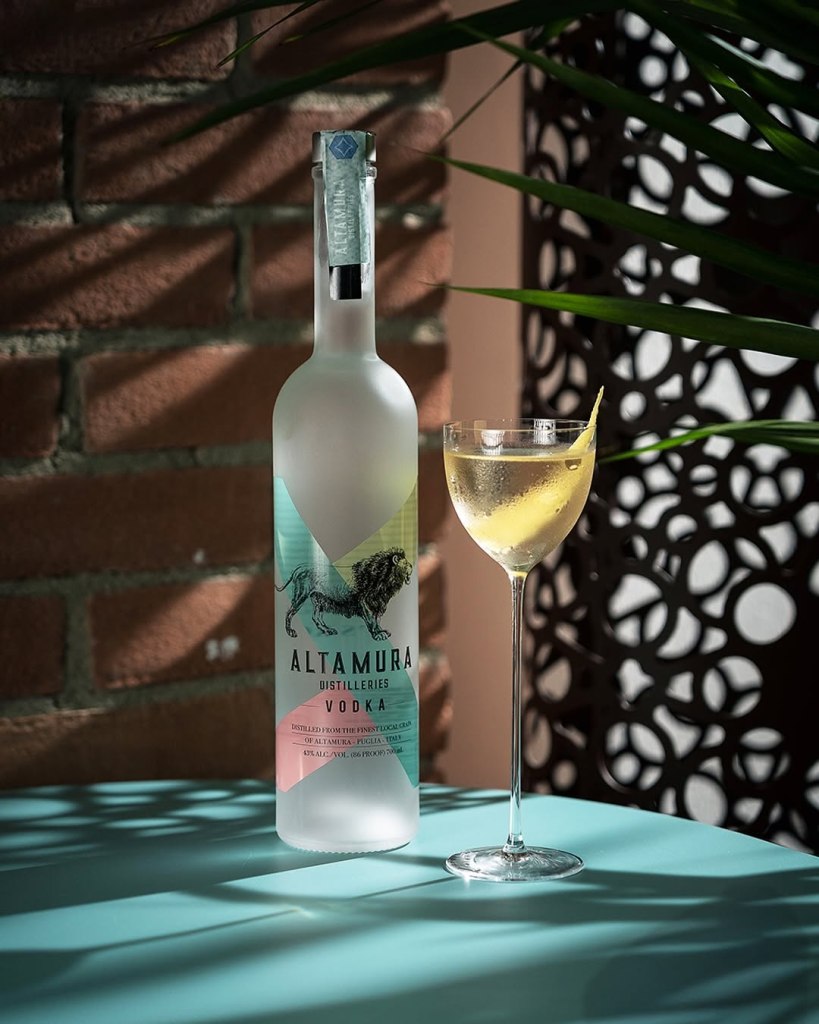
Altamura Distilleries Vodka
Altamura is possibly the most well-known vodka brand coming from Italy. They have collaborated with some of the best mixologists in the world, which has given the brand an enormous boost worldwide. The brand launched in 2024 and all the Italian bars that are on The World’s 50 Best Bars list were the first to serve it, helping to spread the word far and wide. The brand is currently the Official Vodka Partner of The World’s 50 Best Hotels.
The vodka is made from 100% Altamura durum wheat sourced from the Altamura region and nearby areas of Puglia. It is the same wheat that is used to make Altamura bread (Pane di Altamura), the only bread in the world to have Protected Designation of Origin (PDO) status. Farmers of the region have cultivated wheat for over 2,000 years, with Arcangelo, Duilio and Simeto among the varieties grown. The spirit is triple distilled and bottled at 43% ABV.
Altamura Distilleries vodka is made for stylish, party-loving people, it’s a vodka for sharing. They even use a hashtag #liveyourbestlife, which seems a little too Gen Z for me, although I do like the look of the bottle.
Tasting notes
Nose: Flour, white bread, like crusty breakfast roll, subtle nuttiness, very mild aromas
Palate: Light and soft, floury, makes me think of a bakery, some black pepper, a hint of cloves and a touch of brine
Finish: Warming ginger
Their recommended serve is a Martini with orange bitters and a lemon twist garnish. I would also try it with a caper to elevate the subtle brininess. The vodka has that nice, soft cereal note that makes it very easy to enjoy neat but also lends itself to many cocktails.
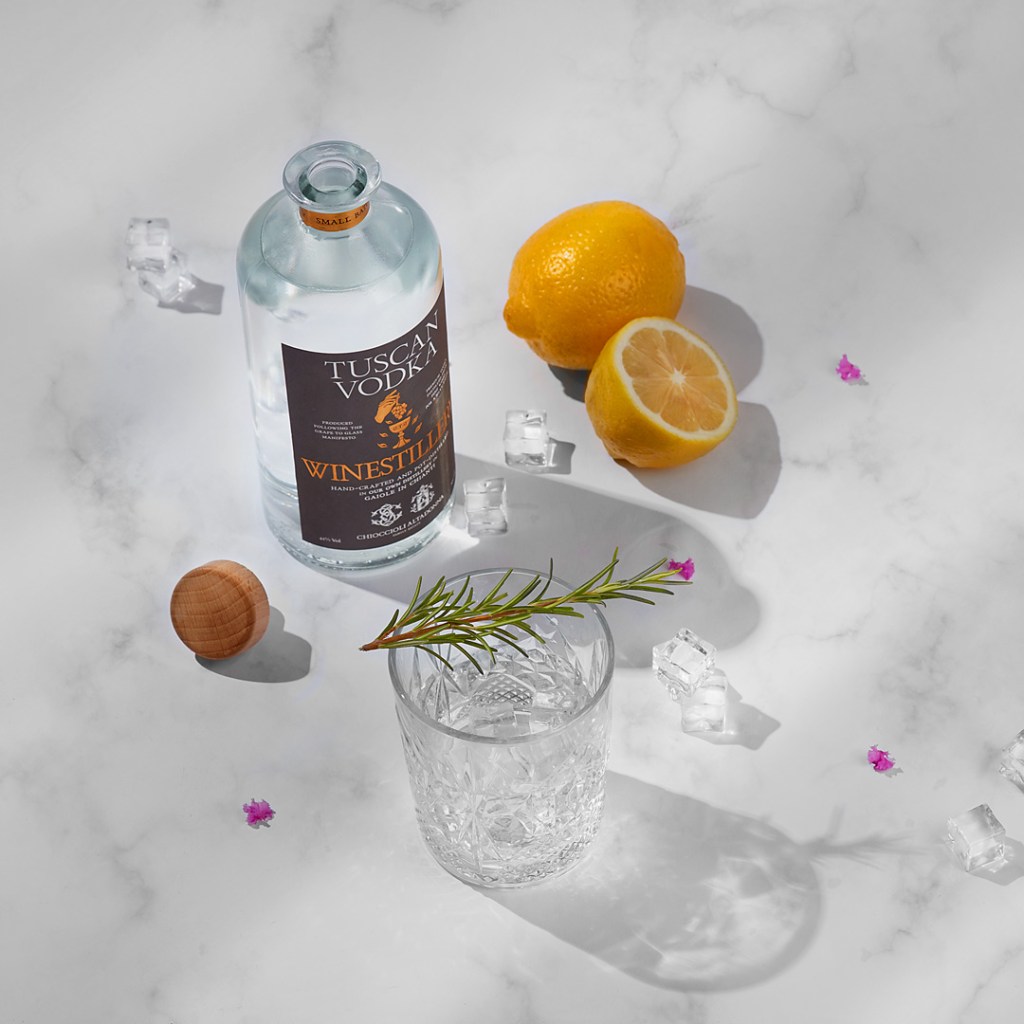
Winestillery Tuscan Vodka
Winestillery is the first and only independent distillery in the Chianti Classico region. They are the first to combine a winery and a distillery. The distillery is in the birthplace of the Chianti wine tradition, Gaiole. They also make gin, whisky, both dry and sweet vermouth and aperitivo bitter. Basically, you could mix a range of classic cocktails simply by using their product range. Tuscan Negroni, anyone?
At Winestillery, they are dedicated to the terroir of the region with the aim of creating products that stay as close to the wine tradition as possible. Their grape-to-glass manifesto states that “The raw ingredients of the Spirits must originate from grapes or wine. If a spirit, according to the law, cannot be produced from these ingredients, all the other steps of the production must be “Wine-Centered” and use traditional elements of the Winemaking Processes.” Hence their vodka comes from grapes, and their whisky is aged in ex-super Tuscan wine casks or Vin Santo (a dessert wine) casks.
Winestillery vodka starts from grapes. The wine is distilled to reach 95% ABV, then redistilled using a pot still to allow the copper to clean the spirit a bit more. It is during that second distillation that the alcohol vapour passes through Alberese rocks picked from the vineyards, which are said to have mineral components from the soil, linking the spirit to the Tuscan terroir. The final spirit is bottled at 42% ABV and priced at €44. It’s definitely at the pricier end of vodka brands.
Tasting notes
Nose: Almost gin-like aroma, a mix of citrus peels, grape pulp, clean and fresh
Palate: Soft mouthfeel, fragrant sweetness, white peppery spice, a touch of saltiness or some minerality
Finish: Slightly nutty
This is my favourite of all three vodkas. Very easy sipping, the mouthfeel is nice and textured. The grape base and citrusy profile would work well in a Martini with a citrus peel garnish, but I will be testing this with alternative options as well. The distillery has also recommended an Espresso Martini.
Qui Si Vola Italian Vodka
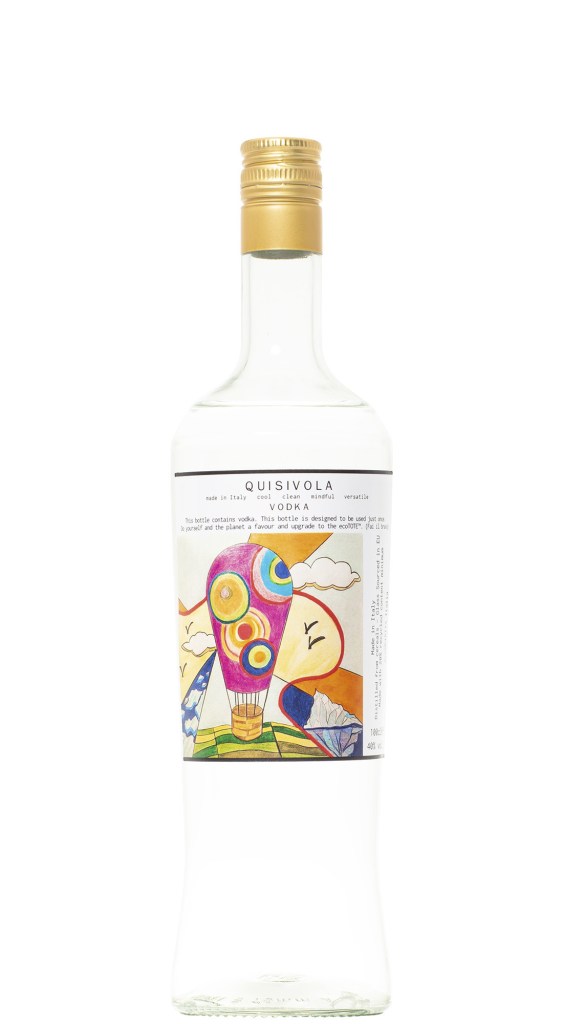
Qui Si Vola is made using 100% Italian wheat. Other aspects of the distillation aren’t available, other than a Carter Head still is used and that the distillation takes place at Torino Distillati. It is bottled at 40% ABV. This is a new brand created by Ecospirits Italia and Velier.
What got me curious about this vodka is the price. Qui Si Vola comes in one litre bottles, and the recommended price is €18.90. It turns out that the brand is mainly designed for the on-trade. The idea is that the bar will buy a bottle of vodka and then, when they are running low, they simply buy more spirit that comes in a reusable container to fill up the empty bottle. The container is then returned to be sanitised and refilled. This way, there will be much less waste and the price stays fair.
The aim is to reduce greenhouse gas emissions and waste by eliminating the use of disposable glass for spirits. To do that, Ecospirits has created a refillable container, Ecotote, with a capacity of 4.5 litres. It can be used for a range of spirit bottles to allow bars to simply buy a bottle once and then order more in this container to refill the bottle.
Tasting notes
Nose: I’m really struggling to find any aroma at all, it smells of newness with a hint of lemon
Palate: Citrus but more pith than peel, a tiny bit of spiciness. It doesn’t taste bad nor is there any burn and the palate is soft enough. It just doesn’t offer much on the palate, which makes me wonder if it has been distilled too many times to strip out all the flavour and aroma.
I think if you are looking for a vodka to make a range of cocktails with, this would be fine. With the two previous vodkas, you don’t necessarily want to use strong flavours, so the vodka can shine; with Qui Si Vola, you can simply use it as the base spirit and mix it with pretty much anything. I guess it gives you a chance to make a wider range of cocktails, so perhaps that works for the on-trade.
Overall
Winestillery was my favourite of these. Although, Altamura is also easy to enjoy both neat or in a Martini, with a soft, bakery-like character. Qui Si Vola is a fair-priced, easy-going base if you’re mixing a range of cocktails. I will certainly be testing more recipes with all three.
So, can Italy make vodka? Based on these three, the answer is yes. Well, especially the first two. If you are visiting Tuscany and want to bring home a bottle of something local, I would recommend Winestillery vodka. Or treat yourself and get the Tuscan dry vermouth as well, so you can make a Martini once you’re back home. Pricey? Yes. But as souvenirs go, it beats a fridge magnet.
Have you tried Italian vodka? Do you have any favourite brands I should add to this list?
*Winestillery Vodka and Qui Si Vola were gifted by Velier. Some of the links used are affiliate links. If you buy through the links, I may receive a commission for the sale. This has no effect on the price for you.

Inka Larissa is an award-winning freelance spirits writer, content creator and Whisky Influencer of the Year 2026. Writing about whisky, cocktails and spirits since 2015, she explores the world of spirits from seed to glass. She is also co-host of the Whisky Sisters podcast.


